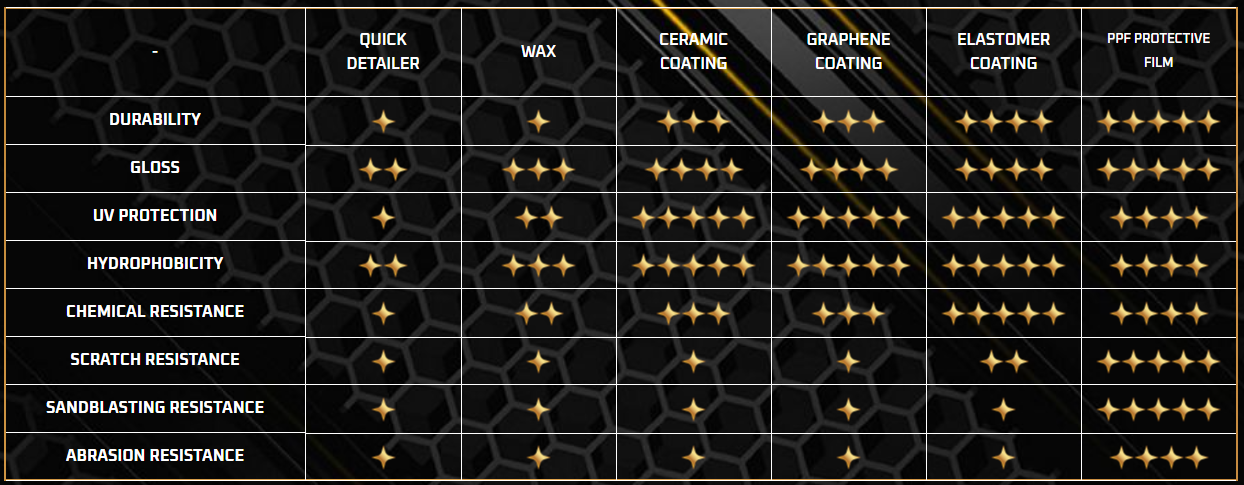
In this example, we present a comparison of the most popular paint protection methods, so you can easily see which solution best protects your car.
Ceramic coating for the entire bodywork, wrapping of vulnerable elements with PPF film
Quick Detailer
It is the quickest and most basic form of refreshing the paintwork. It works perfectly between washes, removing light dirt, dust, and fingerprints, while also improving gloss and surface slickness. However, it does not provide real paint protection — its effect is short-lived and purely cosmetic in nature. It is often used as a complement to other forms of protection.
Colour change with coloured PPF film, together with individual finishing touches
Wax
It is a quick and affordable option that gives the paintwork a deep gloss, but its protection is short-lived — usually lasting only a few months, and its actual durability depends on the way it is maintained.
PPF full front wrap, ceramic coating for the entire bodywork, wheel coating
Protective coatings
If you care about a longer-lasting effect, it is worth considering a ceramic, graphene, or elastomeric coating. Such protection provides long-lasting gloss, resistance to UV radiation, contamination, and minor scratches, while also making everyday car washing easier. It is important to follow the coating care guidelines you receive after the service is completed. We do not leave you without support — we answer questions and remain available by phone and email.
Paint correction, graphene coating for the entire bodywork
PPF film
For those expecting maximum protection, the best choice is to wrap the entire car with PPF film. This solution effectively protects the paintwork against scuffs, sandblasting, and mechanical damage, while preserving the vehicle’s perfect appearance for many years. What is more, the film has a self-healing function — under the influence of heat, micro-scratches disappear, restoring an ideal finish and protecting the paint underneath. This solution is especially recommended for those with a very meticulous approach to car care.
Car paint protection
Car paintwork is exposed every day to many factors that, over time, can worsen its appearance. Intense sunlight, road salt, improper car washing, or even ordinary dirt are enough for dullness, micro-scratches, or characteristic swirl marks to start appearing on the surface.
If they are already visible from a distance, it usually means that paint correction is needed, and in extreme cases even repainting of individual elements or the entire bodywork may be required. That is why it is so important to take care of car paint protection before the first serious damage appears.
Today’s market offers various forms of protection – from very durable solutions to quick protective products used in everyday care.
The strongest protective barrier is provided by PPF film, which effectively protects against stone chips and scratches. However, this is a more premium investment. For this reason, many drivers choose other methods, such as car wax, ceramic coating, and quick protection products such as quick detailer, which improve the appearance of the paintwork and protect it from everyday contamination.
How to protect car paint?
What to protect car paint with?
Each type of protection has its advantages and works best in different situations. The choice depends on the effect you want, how often you wash the car, and how much time you want to spend on care.
1) Car Wax
It is a traditional and still very popular way to protect paintwork. Waxes can be:
✨ soft
✨ hard
✨ synthetic
They create a thin protective layer on the bodywork, enhance gloss, and add depth to the paintwork. They work especially well as protection before winter, as they reduce the build-up of dirt and make the car easier to wash. Their durability usually ranges from a few weeks to a few months, depending on whether you choose a soft wax or a more durable hard car wax.
2) Quick detailers
A great option for people who want to quickly improve the look of the car. They provide slickness, extra gloss, and a hydrophobic effect. Ideal for regular use between full protection treatments.
3) Protective coating
This is a higher level of protection. Polymer, silica, or ceramic coatings create a durable, hard layer that can protect the paint for up to several years. Ceramic coating or wax?
- if you care about maximum durability and chemical resistance, ceramic will be better.
- if you want beautiful gloss and easy application, wax will do the job perfectly.
4) PPF protective film
The highest level of bodywork protection—it works like a “shield” for the paint. It effectively protects against stone chips, scratches, parking abrasions, insect etching, and road salt. Many modern films have a self-healing function—small micro-scratches disappear under sunlight heat or hot water.
How to care for paint on a daily basis?
Even the best car paint protection requires proper care.
Here are the most important rules:
✨ Avoid automatic car washes—brushes create scratches
✨ Keep your car under a roof or in a garage
✨ In winter, use only soft tools for snow removal.
✨ Remove bird droppings, resin, and other aggressive contamination immediately
✨ Regularly check the condition of the paint and react to every chip.